

.wav file of under 60 seconds and under 5 MB, and the exact words spoken in each one.
Start an evaluation
In the sidebar, under Voice evaluation, click Speech-to-Text. Then click New evaluation.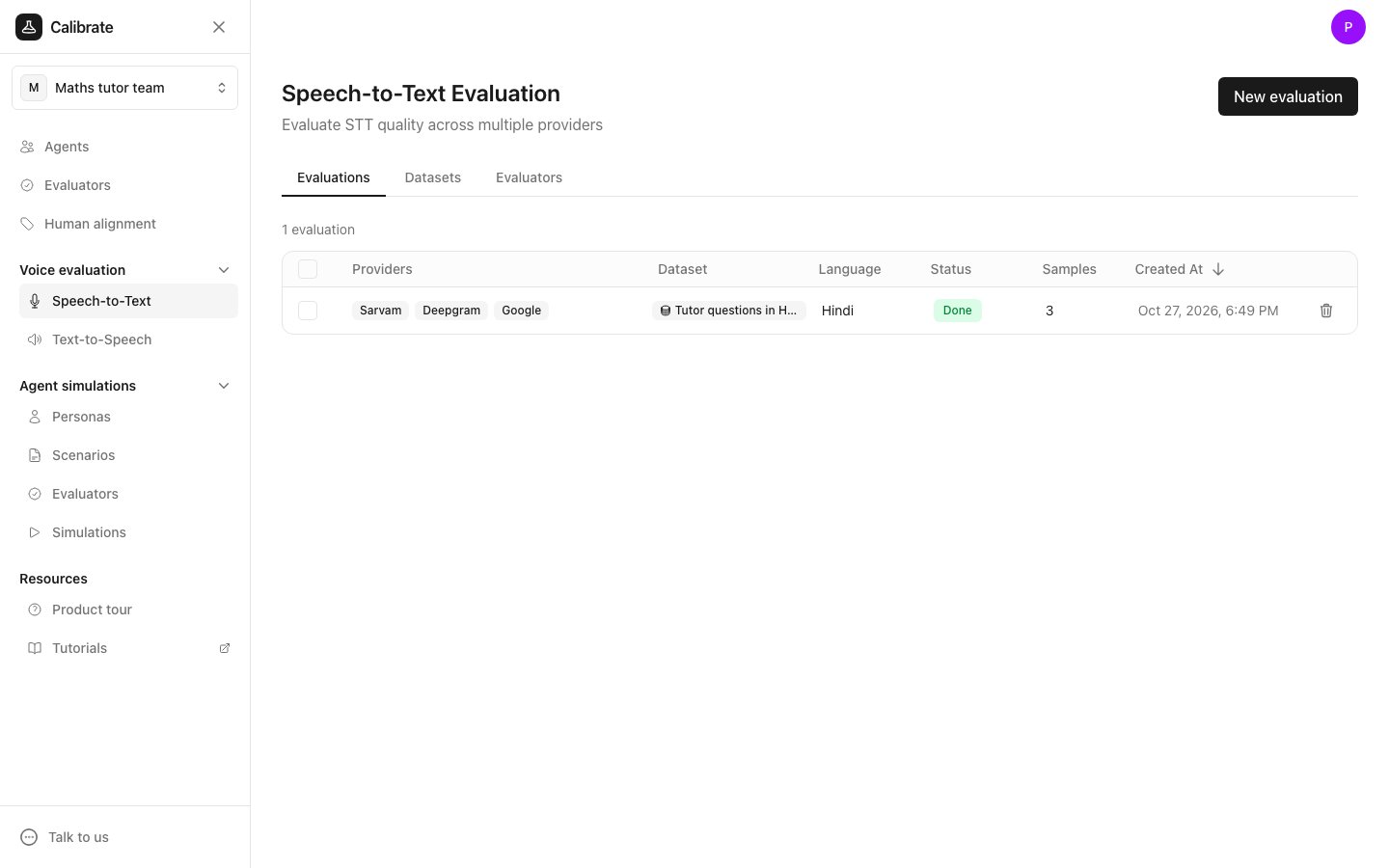
Add your recordings
The Dataset tab opens first. Keep Upload new selected.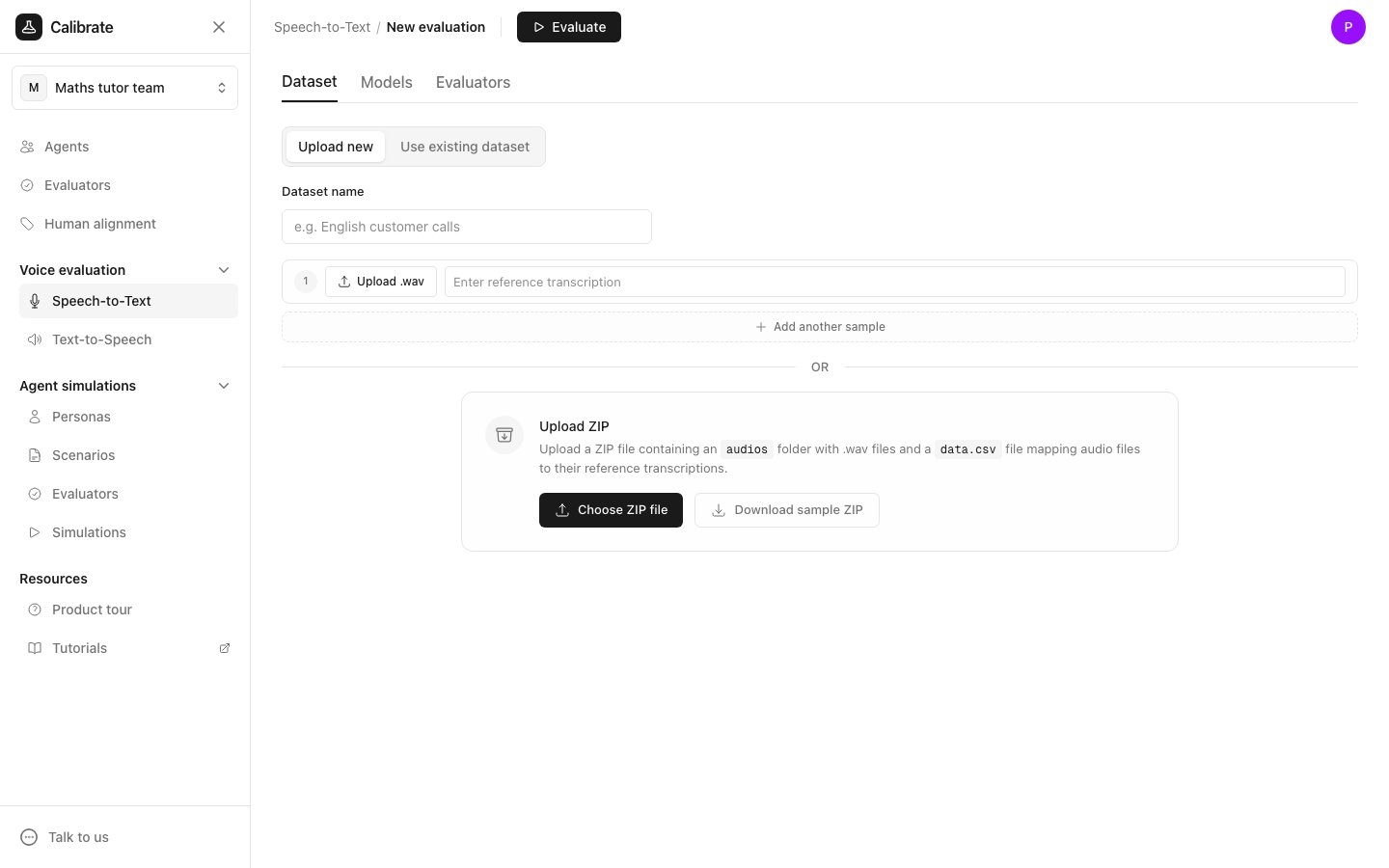
- Under Dataset name, type
Tutor questions in Hindi. - In the first row, click Upload .wav and pick a recording.
- In the box next to it, type the exact words spoken, for example
मुझे भिन्न समझ नहीं आते. - Click Add another sample for each other recording. This example has three:
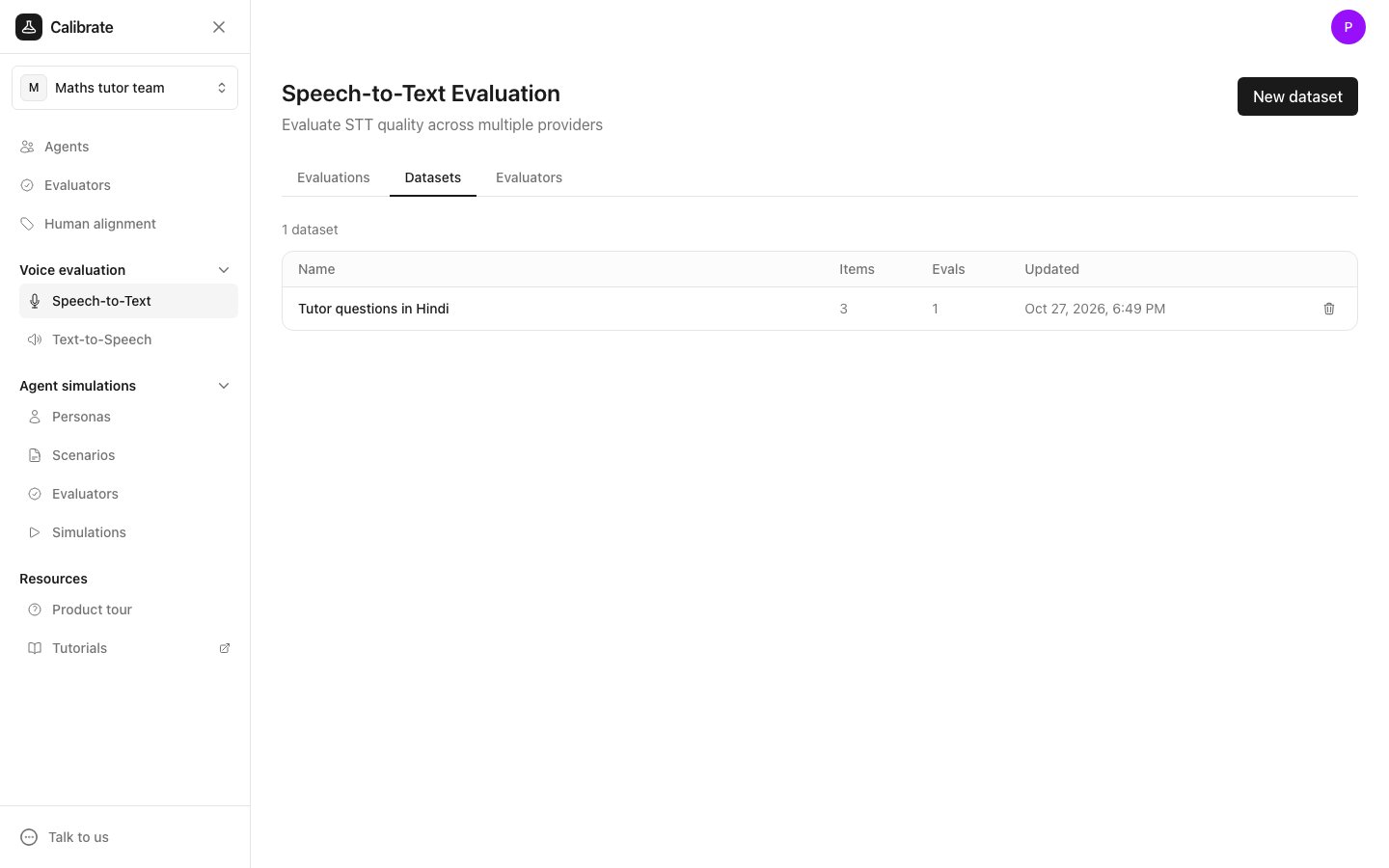
The recordings are saved as a dataset with this name, so you can use them again in later evaluations. Your datasets are listed on the Datasets tab of the Speech-to-Text page.
Upload many recordings at once
Upload many recordings at once
In the Upload ZIP box, click Choose ZIP file. The ZIP file holds an Click Download sample ZIP to get a ZIP file in the right shape.
audios folder with your .wav files and a data.csv file with two columns:Choose the models
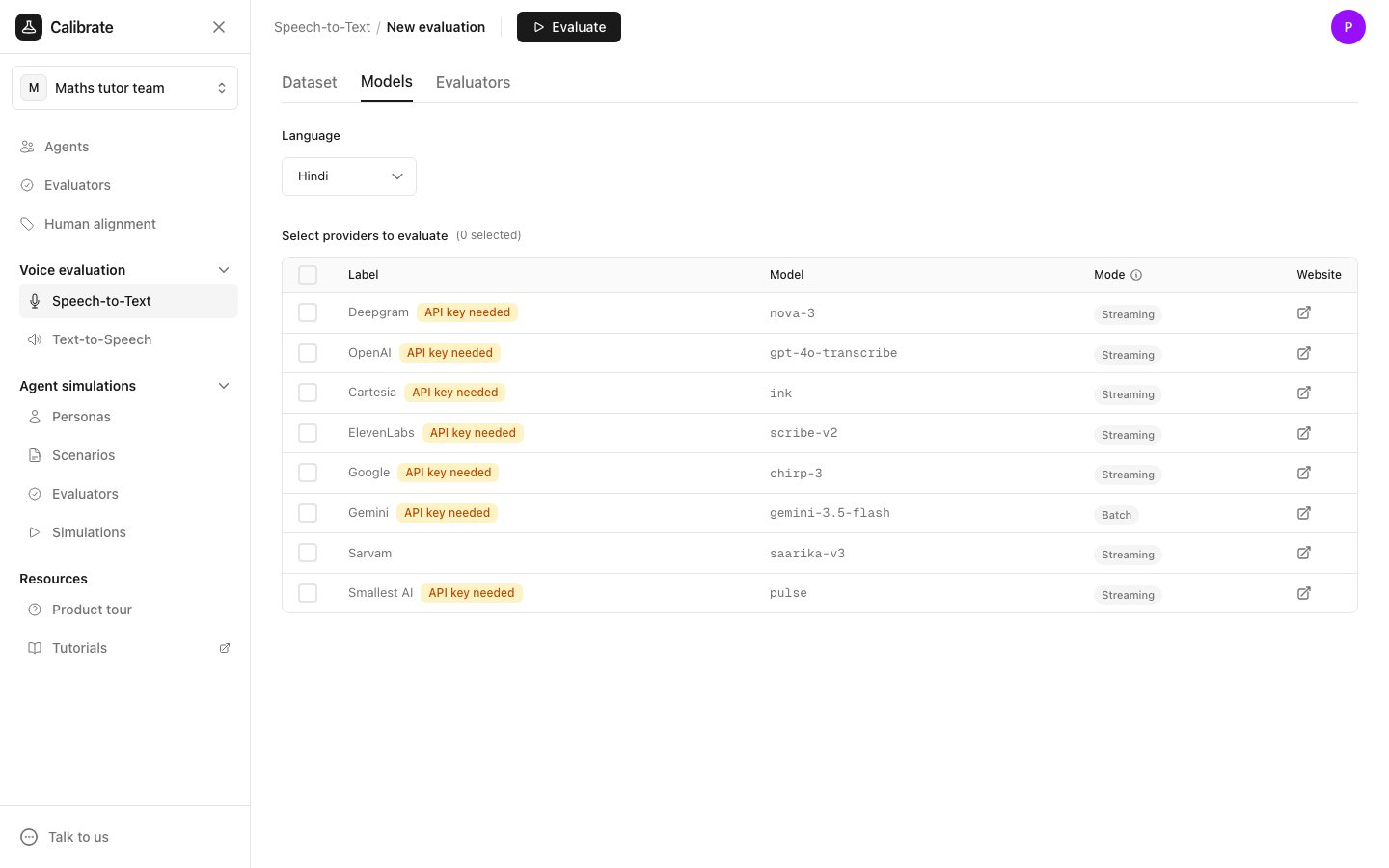
- Click the Models tab.
- Under Language, pick Hindi. The list shows only models that support Hindi.
- Under Select providers to evaluate, tick Sarvam, Deepgram and Google. Each row shows the exact model.
Choose how transcripts are scored
Click the Evaluators tab.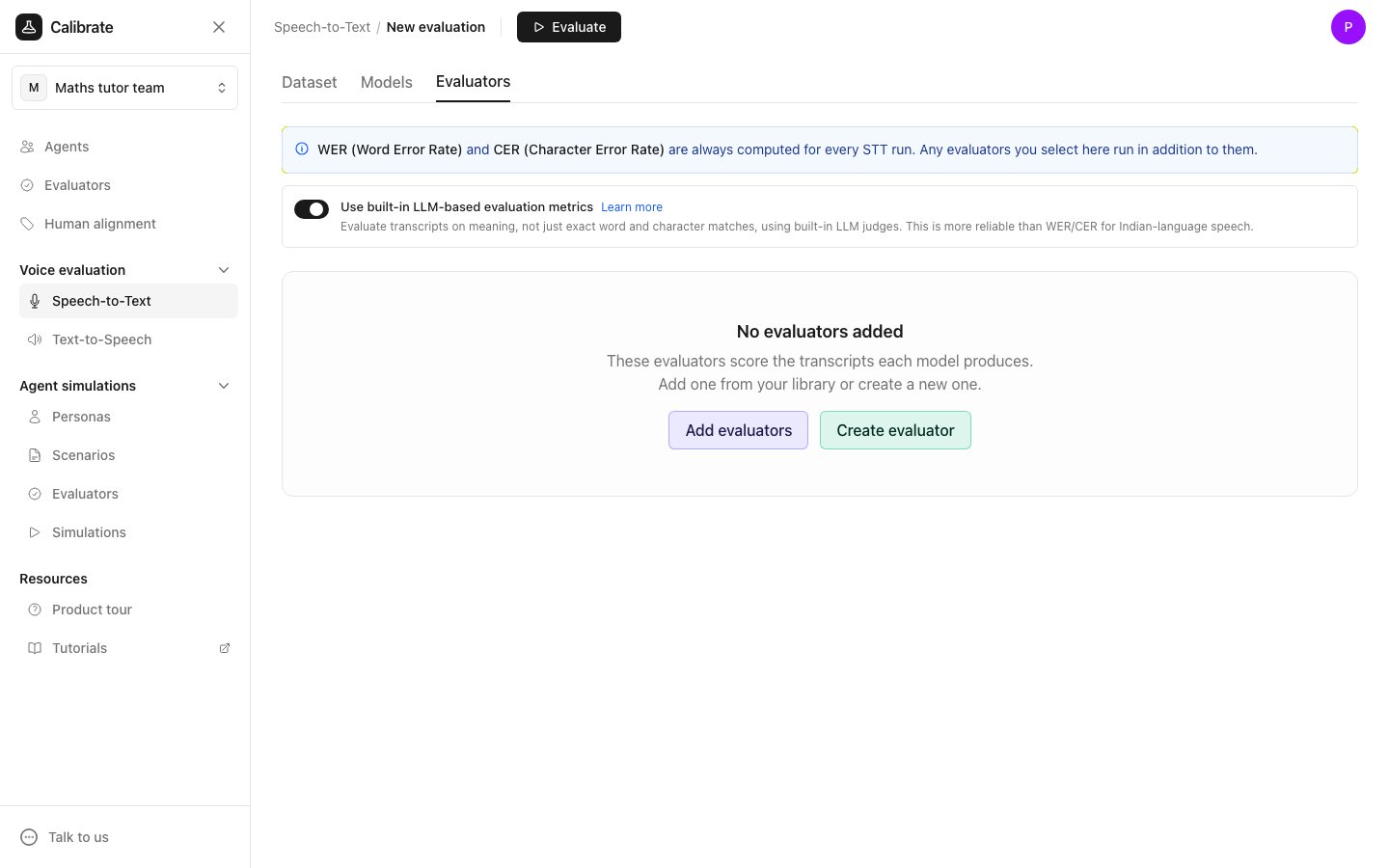
Run the evaluation
Click Evaluate at the top of the page. The results page opens and fills in as each model finishes.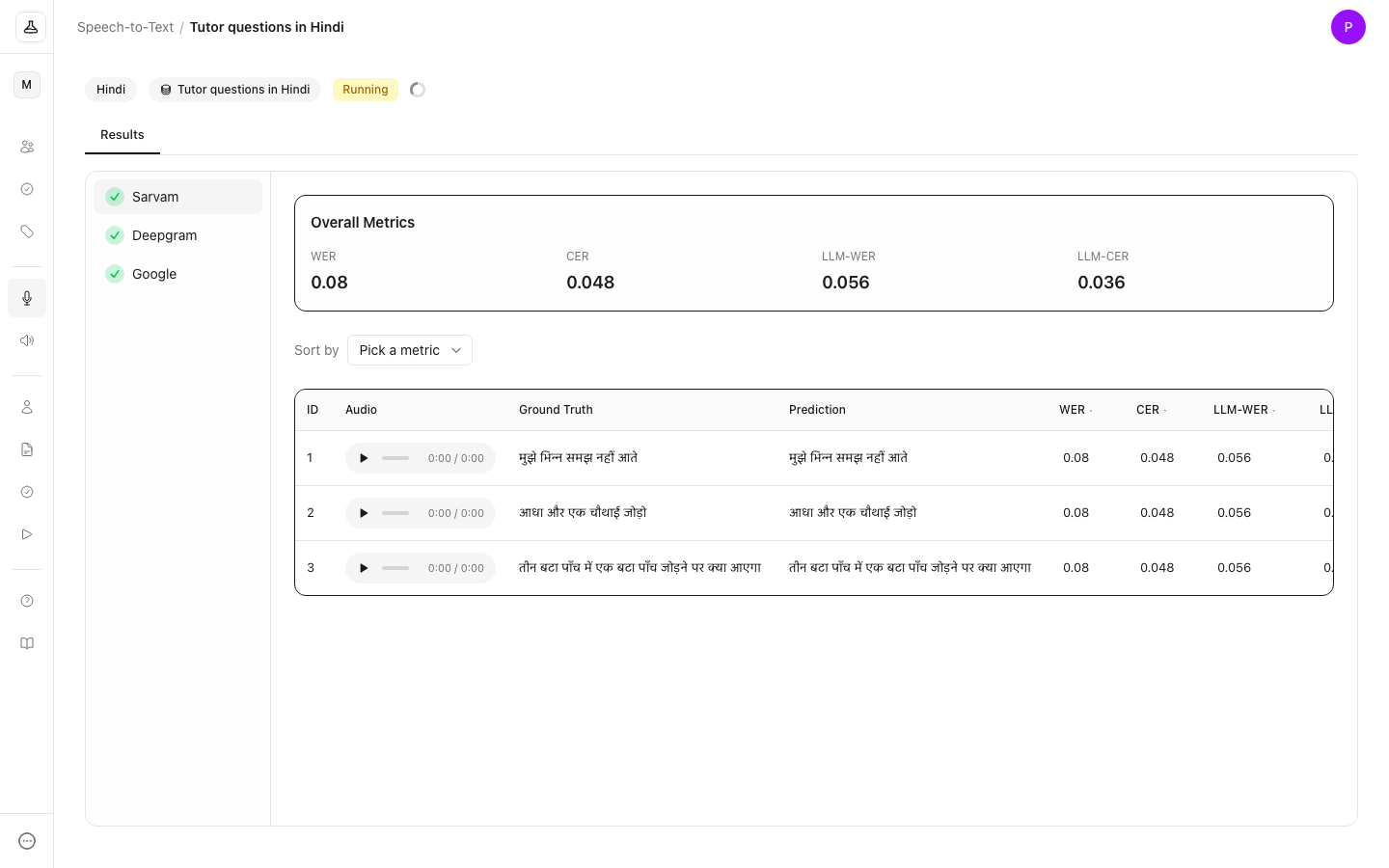
Read the results
The Leaderboard tab puts the models side by side, with one chart for each score. Lower WER and CER are better.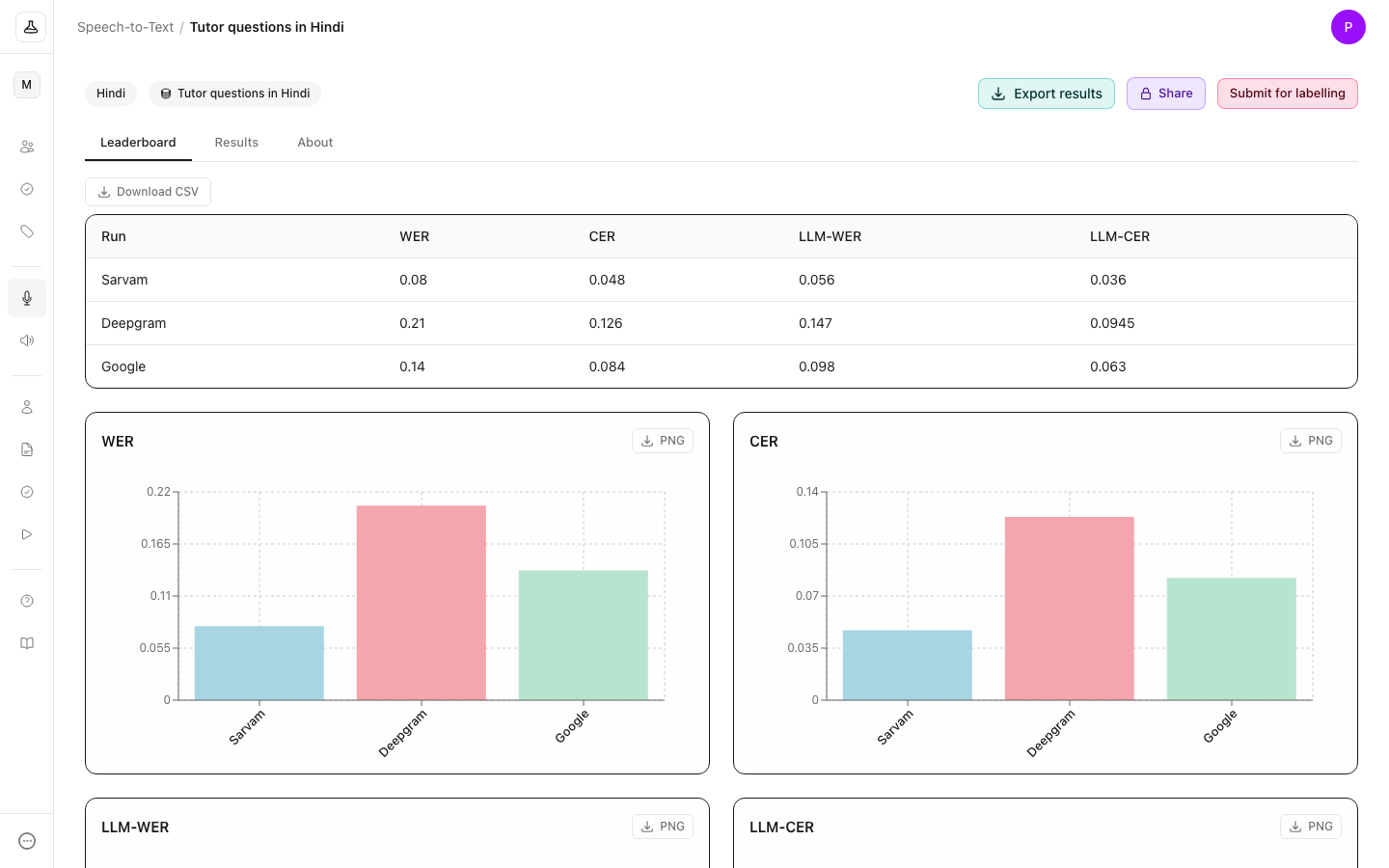
Export and share the results
- Export results downloads a ZIP file. It holds a CSV file with every model’s transcript and scores for each recording, and an
audiosfolder with the recordings. - Download CSV on the Leaderboard tab downloads the leaderboard table.
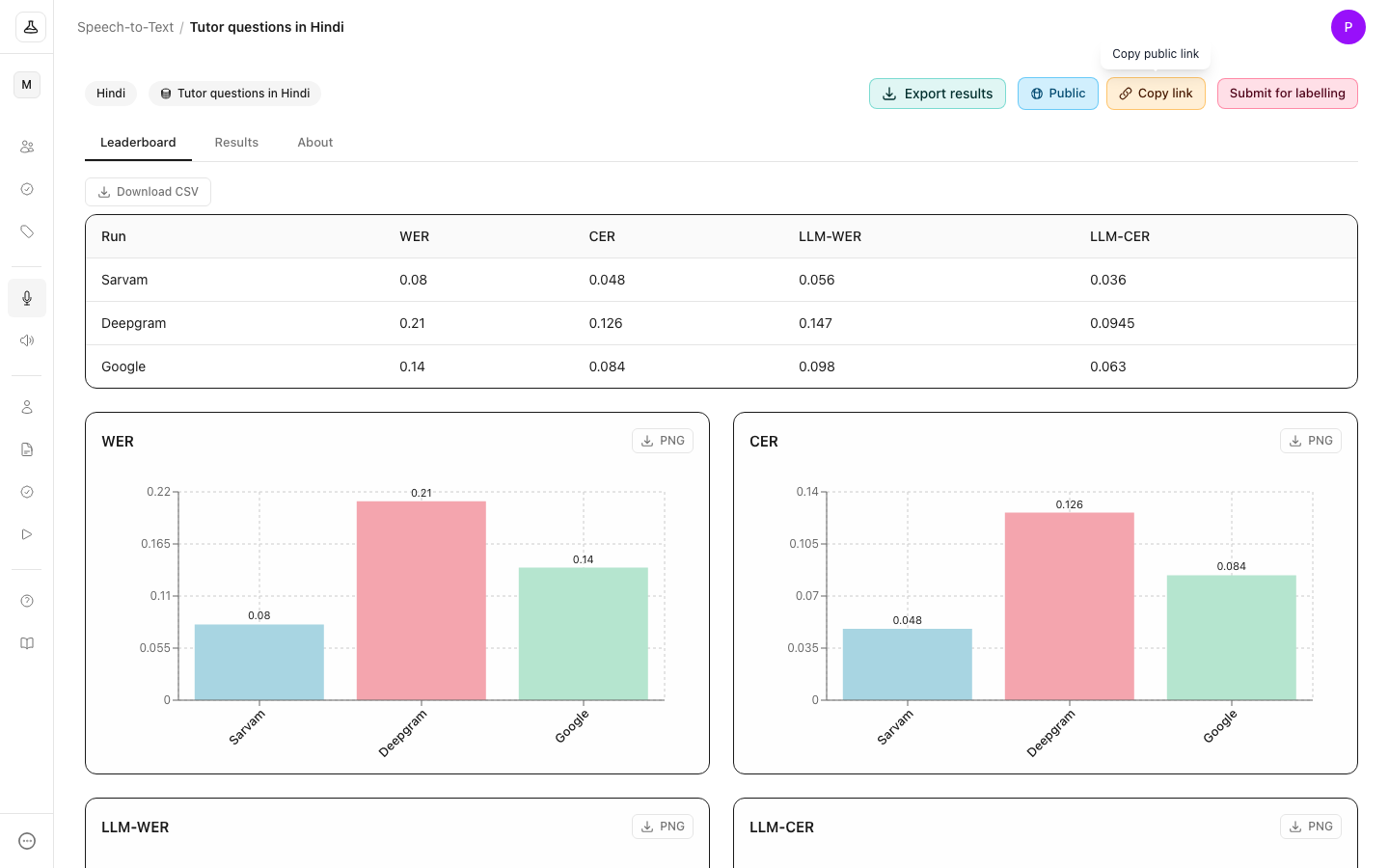
- Share makes the results page public. Click Copy link to copy the link. Anyone with the link can see the results without a Calibrate account. Click Public to make the page private again.
- Submit for labelling sends rows you ticked on the Results tab to a labelling task, so people can check the transcripts. See Create a labelling task.
Next steps
Speech-to-text metrics
What WER, CER and the meaning-based scores measure
Benchmark text-to-speech models
Compare the voices that read the tutor’s replies aloud